
Reflections by Katerina Karp, Curator, Visual Artist, Researcher
Where, then, should we search for absolute truth?
In my anthropological and philosophical research, I often return to the problem of reality — how it is perceived across cultures, societies and even social classes. Knowledge begins with experience, yet experience itself is shaped through knowledge. But what is this process we call knowing? It always involves instruments, a subject, an object, and an environment — all of which influence both what we perceive and how we perceive it. Where, then, should we search for absolute truth? Or has post-positivism silenced that question once and for all? Epistemology provides many answers, but today I want to put attention to a new tool that is quietly weaving itself into the fabric of human inquiry: artificial intelligence.
The dual nature of knowledge
Knowledge has always had two dimensions. On one side, it is bound to practical survival: the ability to distinguish edible from poisonous, to predict the change of seasons, to read traces in the earth. On the other, it arises from a thirst for truth, from the drive to understand the very structure of reality.
Yet between human beings and truth there have always been mediators: our senses, our languages, our concepts, our scientific theories. Kant argued that we can know only phenomena, structured by our reason, while the “thing-in-itself” lies forever beyond our reach. Schopenhauer, in turn, saw the world as an illusion of representation, a veil over the irrational Will.
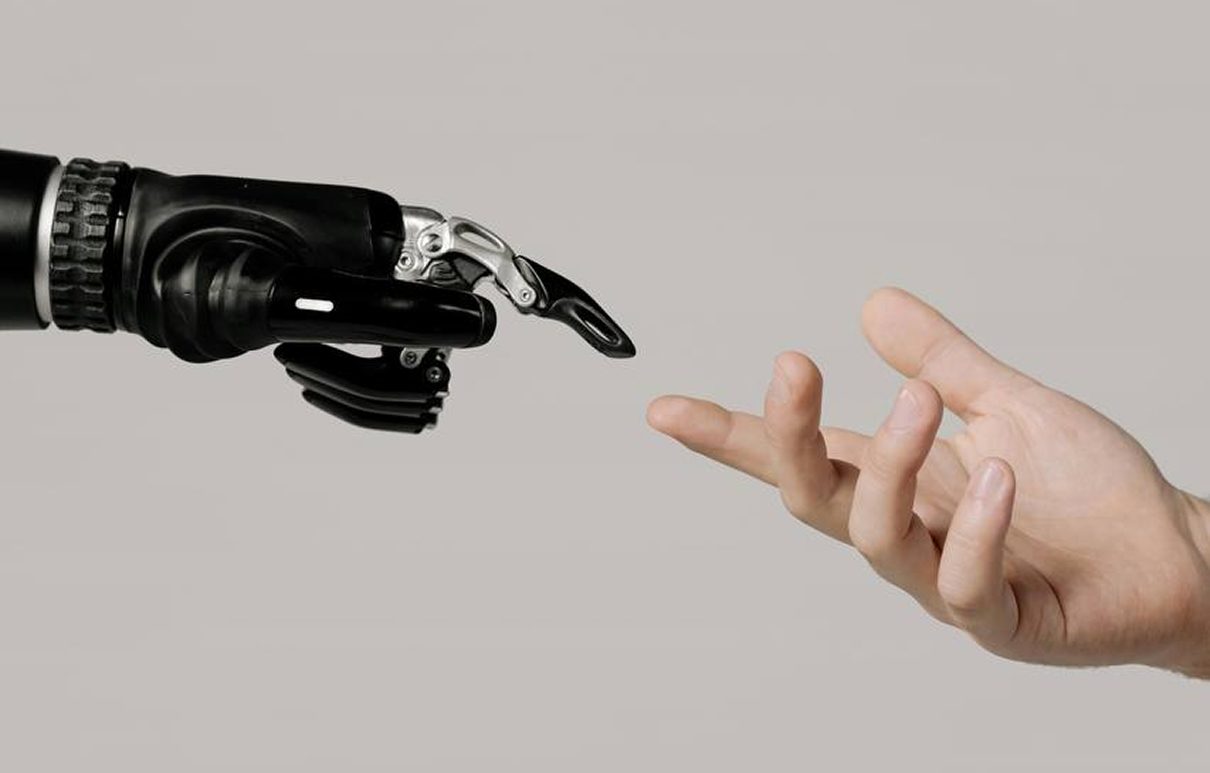
Today, a new mediator has entered this lineage — artificial intelligence. It is no longer merely a technical tool. Increasingly, its answers shape our perception of the world. People turn to AI not only for translations or help with schoolwork, but also with questions once directed at philosophers or priests: What is the meaning of life? What awaits after death? Who am I?
Humanity’s need for knowledge
The pursuit of knowledge has accompanied humanity at every stage of history. In the Paleolithic era, we studied the stars to anticipate the seasons. In antiquity, philosophers sought universal systems to explain the world. In the modern age, science became the central instrument of discovery, armed with telescopes, microscopes and theoretical physics.
This need has always had two facets:
- Practical — survival, safety, the ability to act.
- Existential — the desire to understand the meaning of one’s place in the world.
Today, we continue to solve the same tasks, only with the tools of the 21st century: checking weather forecasts, reading the news, searching for medical advice. Yet increasingly, people also approach AI to probe more delicate realms: emotions, moral choices, philosophical questions. According to Common Sense Media, 70% of teenagers have used AI companions such as ChatGPT, Character.AI or Replika for advice or emotional support, and a third of them have discussed serious matters with machines instead of people.
From logic to probabilities
The history of knowledge is also a history of instruments. Early artificial intelligence was built on predicate logic: formal rules, symbolic structures, strict reasoning. It was a binary world of truths:
- “Socrates is a man.”
- “All men are mortal.”
→ “Socrates is mortal.”
But reality is far messier. Language is ambiguous, experience is partial, and truth often resembles a spectrum of probabilities more than an absolute axiom.
Modern AI systems (such as GPT) operate not with certainties but with likelihoods, predicting words based on statistical patterns drawn from vast corpora of text. Thus the claim “Socrates is mortal” is not treated as a logical axiom but as the outcome of probabilistic inference.
A fitting metaphor might be this: logical AI resembles a philosopher deducing syllogisms, while probabilistic AI resembles a poet, sensing meaning through context and association.
Today, researchers seek hybrid approaches — combining neural networks with symbolic reasoning (Symbolic+Neural AI, Graph Neural Networks, neuro-symbolic methods). This is an attempt to bring together the rigor of logic and the flexibility of statistics.
AI and existential inquiry
Through AI, humanity now explores not only external reality but also its inner landscape. Research has shown:
- RAND Corporation found that AI chatbots respond inconsistently to questions about suicide, highlighting the need for ethical safeguards.
- Pew Research reports that 30% of Americans believe AI may acquire subjective experience by 2034.
- Communities on Reddit and elsewhere have become sites of collective exploration of existential questions in dialogue with machines.
AI is thus emerging as a mediator not only of our knowledge of the world but also of our reflection upon ourselves.
Kant and Schopenhauer “revisited”
- Kant: AI resembles the faculty of reason. Logic-based systems echo our a priori categories, while probabilistic models approximate empirical reasoning. They help us navigate phenomena, but they do not reveal the “thing-in-itself.”
- Schopenhauer: AI belongs entirely to the realm of representation. It aids us in orienting ourselves within appearances, but never pierces through to the underlying Will.
Human beings have always needed instruments of knowledge — from myth to telescope, from syllogism to neural network. Artificial intelligence is the newest link in this chain, reflecting not only the external world but also our inner search. It organizes information, predicts events, and even engages us in existential dialogue, though always within the limits of its architecture.
The pursuit of knowledge and self-knowledge remains the driving force of human history. Today, AI has become a mirror — one in which we see not only reality itself but also our own restless desire to understand it.