
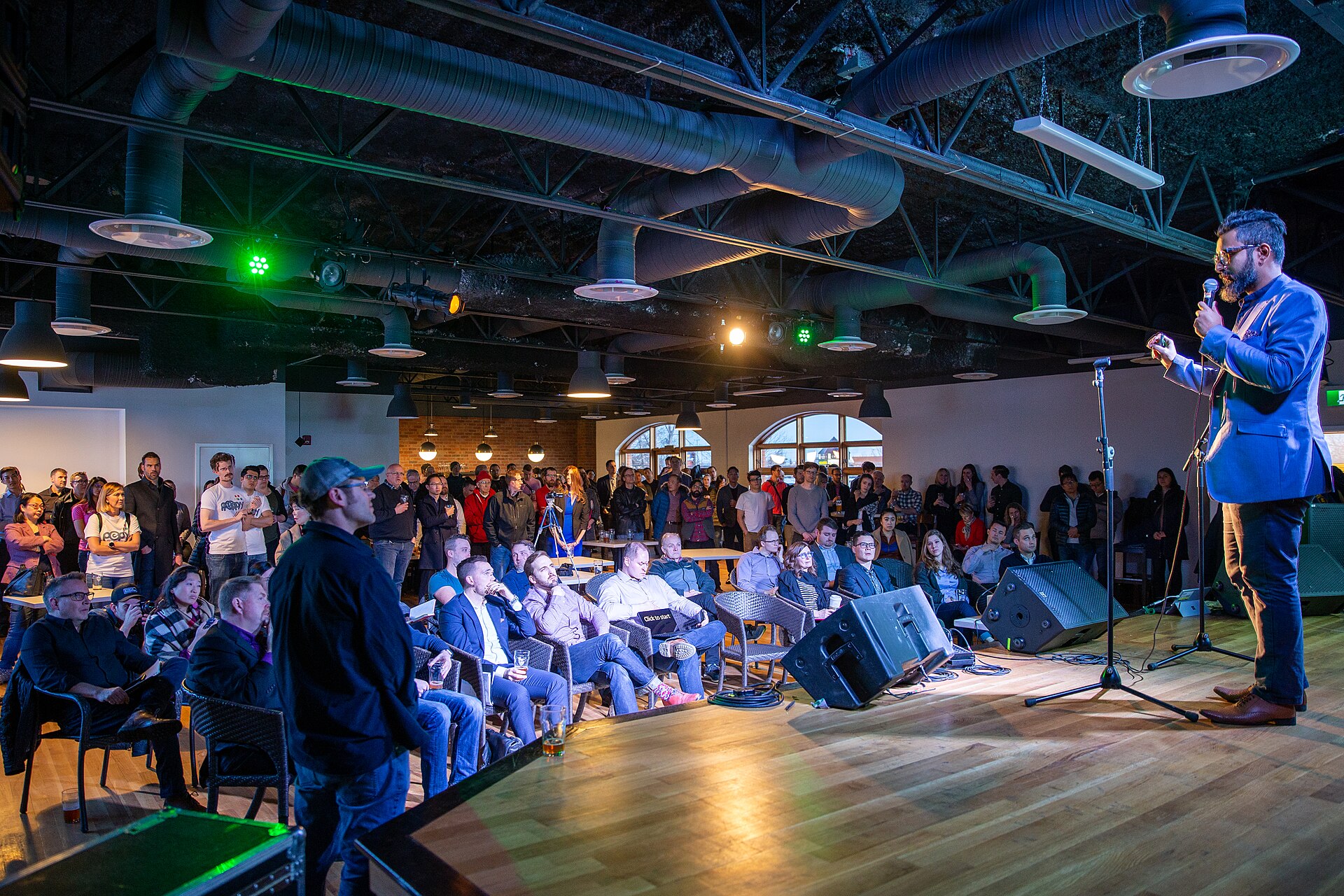
A startup panel or demo is a compressed test of judgement. In a short window, a founder has to explain a problem, show how a product addresses it, and defend the choices behind it in front of an audience that includes investors, operators, and sometimes journalists. The format varies, from a stage pitch to a closed-room session with a handful of assessors, but the underlying demands stay the same. Preparation is what separates a founder who looks in control from one who is visibly improvising.
This checklist sets out how to prepare before, during, and after the event. It applies to accelerator demo days, investor demo sessions, ecosystem meetups, and university enterprise events. The aim is not a script to deliver word for word, but a structure you understand well enough to adapt when the room pushes back.
What panels and demos actually test
Many founders assume the exercise is a presentation contest. It is closer to a conversation under mild pressure. Panellists and assessors are watching for evidence of clarity and command: can you state the problem plainly, do you understand your numbers, do you know your customer, and do you respond to a hard question without deflecting? A founder who answers "we are still figuring that out" about a core assumption loses more ground than one who explains the reasoning and the evidence gathered so far.
The event also reveals temperament. Long pauses, defensive answers, and irritation at scrutiny all register. The panel is less interested in polished delivery than in whether you can think on your feet about your own business, which is a skill that emerges from genuine familiarity with the detail.
Knowing your audience and the format
Preparation starts with a few direct questions. Who will be in the room? Is the panel made up of investors, potential customers, or fellow founders? How long is the slot, and is it a presentation, a pitch, or a moderated discussion? Will there be a demo, a slide deck, or neither? Are questions taken during the session or at the end?
The answers reshape everything. An investor panel wants to understand the market, the model, and the team. A customer-oriented session wants to know what problem the product solves today. A demo day audience is often broader, so the narrative has to work for people who lack your technical context. Ask the organiser which of these it is, and ask whether the running order and time limits are firm.
Building a demo that survives interruption
If you are demonstrating a product, assume the demo will not run smoothly. Live software can be slow, a connection can drop, or a panellist can interrupt with a question halfway through. Build a version of the demo that works without a live connection, using a short recording or a set of prepared screens. Rehearse the path you will take so that you can skip to any step on request.
Keep the demo focused on one clear use case. Founders often try to show every feature, which leaves the audience unsure what the product actually does. A single, well-chosen workflow that shows the product working is more convincing than a tour of menus. Have a fallback ready, and decide in advance what you will say if the demo fails, so that a technical problem does not derail the whole session.
Crafting the narrative and the numbers
A panel presentation needs a narrative arc: what problem exists, why it matters, what you built, and why you are the right team. Keep it short. A well-known structure is the problem, the solution, the market, the traction, and the ask. The order can flex, but the audience should never be left guessing what you want.
Numbers make the narrative concrete, so bring the few figures you can defend: users, revenue, growth, or savings for a customer. Know the source of each and the period it covers, and be ready to explain how it was measured. If a figure is early or uncertain, say so plainly. An honest small number carries more weight than an inflated one that unravels under a follow-up question.
Handling questions from investors and operators
The question period is where panels form most of their impression. Listen to the whole question before answering, and if it is compound, address the parts in order. If you do not know the answer, say so and describe how you would find out. This is more credible than a confident but vague reply.
Expect a few recurring themes. Panellists ask about competition, about why customers would switch, about what stops a larger player copying the idea, and about the biggest risk you see. Prepare honest answers to each. If a question exposes a genuine weakness, acknowledge it and explain your current thinking, because a founder who understands their vulnerabilities reads as more experienced than one who denies they exist.
Rehearsing, timing, and follow-up
Rehearse aloud, to a person if possible, and time every attempt. Almost every first rehearsal runs long, so cut until you finish comfortably inside the limit. Rehearse the question period by having a colleague challenge your numbers and assumptions. On the day, arrive early, test the setup, and keep a one-page summary of your key facts within reach.
After the event, follow up quickly with anyone who asked a substantial question, and record what was asked so you can refine the pitch for next time. Panels are one element of a longer relationship, and a prompt, specific follow-up shows that you treat the conversation as the start of something rather than a one-off performance.
Practical checklist
- [ ] Ask the organiser who is in the room and what the format requires.
- [ ] Confirm the time limit, the running order, and whether a demo is expected.
- [ ] Prepare an offline version of any product demonstration.
- [ ] Focus the demo on one clear use case rather than every feature.
- [ ] Shape the narrative around problem, solution, market, traction, and ask.
- [ ] Bring only the figures you can defend, with their source and period.
- [ ] Rehearse aloud, time it, and practise answering hard questions.
- [ ] Follow up promptly with anyone who raised a substantive point.
Contributing to BGTC Voice
Preparing well for a panel or demo turns a nerve-wracking appearance into a useful conversation about your work. If you have refined a pitch through repeated events, or learned from a demo that went wrong, BGTC Voice welcomes practical accounts of what you changed and why. Such write-ups help other founders approach the stage with more confidence and honesty.