
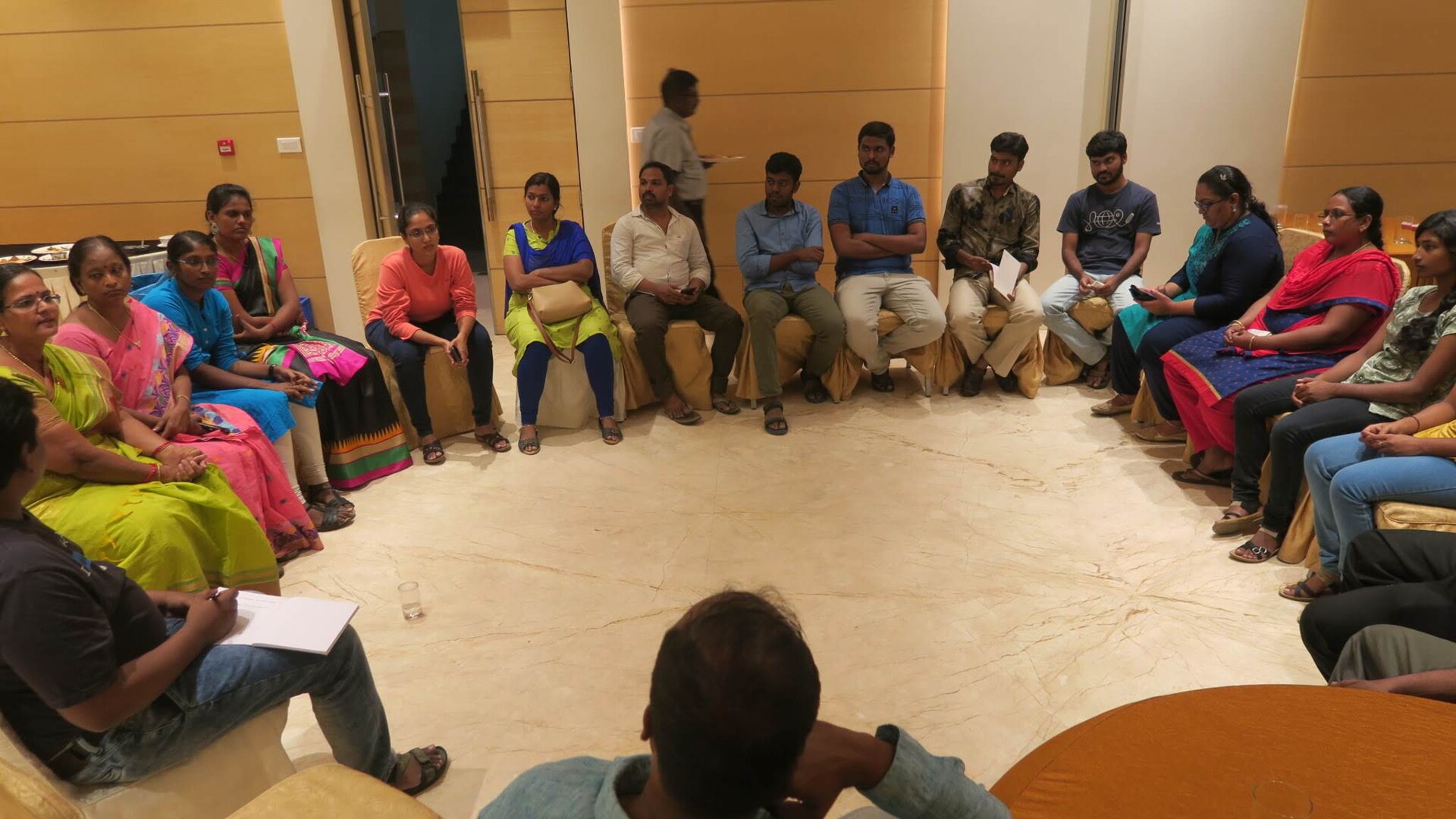
A peer critique session can be the most valuable hour in a creative professional's month, or it can be an uncomfortable ritual that leaves everyone politely bruised and no further ahead. The difference rarely comes down to the talent in the room. It comes down to how the session is designed: who speaks, in what order, with what focus, and what happens after the feedback lands.
Critique works best when it is treated as a method rather than a conversation. A clear structure protects the maker from an avalanche of scattered opinions and protects the reviewers from the temptation to show how clever they are. This guide sets out how to run a session that produces usable information and leaves the work stronger.
Why critique often fails
The most common failure is the unstructured free-for-all. Everyone reacts at once, comments jump between concept, execution and personal taste, and the maker leaves with a noise of impressions but no clear next step. The loudest voices set the agenda, and quieter but more useful observations never surface.
A second failure is the trap of the polished presentation. When a maker presents only finished work and asks for general approval, reviewers have little to work with and tend to offer pleasant generalities. Feedback improves in proportion to how specific and how early the question is.
A third failure is the personal turn. When comments attach to the person rather than the work, defensiveness rises and honesty falls. A well-designed session keeps the discussion on the artifact and the decisions behind it.
Setting the rules before the session
Before any work is shown, the group should agree on the ground rules. These need not be lengthy, but they should be explicit, because shared expectations are what let people take creative risks with each other.
The most important rule is that feedback addresses the work, not the maker. The second is that the maker defines the question. Rather than asking whether people like the piece, the maker states what stage it is at and what kind of help would be useful, such as whether the core idea reads clearly or whether a particular decision is working.
A third rule is that reviewers describe before they judge. Stating what they actually see or experience, before offering an opinion, forces precision and often reveals that people are reacting to different things.
Structuring the time
A reliable structure gives the session a beginning, a middle and an end, and it gives each participant a defined role. The exact timing can flex, but the sequence should not.
Start with the maker's introduction, kept short: the context, the stage of the work and the specific question. Then allow the reviewers to examine the work in silence, taking notes rather than talking. This quiet period prevents the first comment from anchoring everyone else.
Next, work through the feedback in a fixed order, drawing on each reviewer in turn so that dominant personalities do not crowd out the rest. Then give the maker time to ask clarifying questions before anyone moves to solutions. Finally, close by summarising the key points and the maker's intended next step.
A workable session format
For a group of six to eight, a practical shape is fifteen minutes for the maker's introduction and silent examination, thirty minutes for structured feedback, ten minutes for the maker's questions, and five minutes for the summary and next step. Larger groups need more time or fewer pieces, because compressing the structure is what produces shallow feedback.
The role of the facilitator
Someone has to hold the structure, and it should not be the person whose work is under review. The facilitator keeps time, invites the quieter reviewers, and intervenes when a comment drifts into personal territory or when a debate becomes circular.
The facilitator also protects the maker's right to listen rather than defend. In a good session, the maker takes notes and does not argue each point, because the purpose is to gather information, not to win the discussion. The maker can sort and weigh the feedback later, in private.
Good facilitation is mostly invisible. It shows up in a session that ends on time, in which every voice was heard and the maker leaves with something concrete to act on.
Giving and receiving feedback well
Useful feedback is specific, honest and grounded in the work. Instead of saying a piece feels off, a reviewer might explain which element is causing confusion and why. Instead of praising everything, a reviewer identifies one or two things that are genuinely working, so the maker knows what to protect as well as what to change.
Questions are often more useful than verdicts. Asking why a particular decision was made draws out the maker's reasoning and helps reviewers judge whether the reasoning holds. It also keeps the discussion collaborative rather than adversarial.
Receiving feedback is its own skill. The maker should listen without immediately justifying, note the comments, and resist the urge to accept or reject anything on the spot. Not all feedback is correct, and the maker, not the group, decides what to do with it.
Following up so the work improves
A critique session only pays off if something changes afterwards. The maker should leave with a short list of options to consider, and should share the resulting revision with the group, however briefly. This closing of the loop is what turns a pleasant discussion into a working method.
It also strengthens the group. When reviewers see that their input shaped the work, they invest more care in the next session. When they never learn what happened, they gradually stop paying attention.
Reviewing how sessions run, once every few months, keeps the format honest. A short reflection on what produced the most useful feedback helps the group refine its own practice over time.
Practical checklist
- [ ] Agree the ground rules before any work is shown.
- [ ] Have the maker state the stage of the work and one specific question.
- [ ] Give reviewers a short period of silent examination before discussion.
- [ ] Invite feedback in a fixed order so all voices are heard.
- [ ] Ask reviewers to describe what they see before offering an opinion.
- [ ] Keep comments focused on the work, never on the maker.
- [ ] Let the maker listen and take notes rather than defend.
- [ ] Close the loop by sharing the revised work with the group.
Contributing to BGTC Voice
Good critique is a craft in its own right, and the professionals who practise it well have methods worth sharing. If you have designed or facilitated peer critique sessions, or seen a format genuinely improve the work of a group, we would welcome your perspective in BGTC Voice. Describe the structure and the reasoning honestly, and keep claims about results grounded in what you actually observed.