by Katerina Karp, Creative Director of the film
Introduction: The Poet as a Form of Life
"To live for eternity. To live in a way that makes one worthy of eternity."
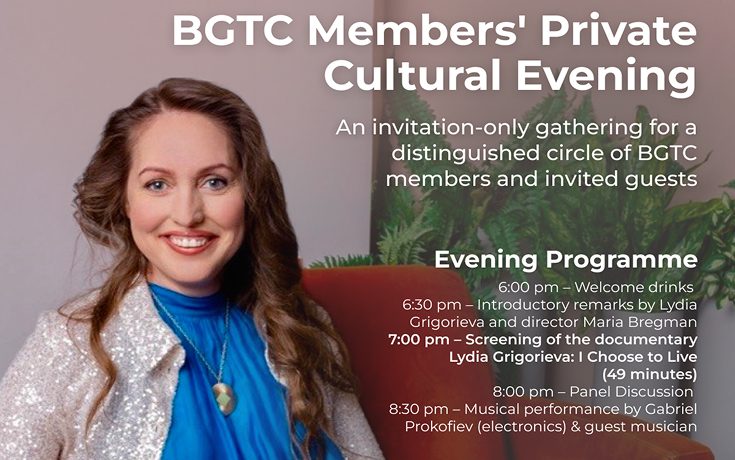
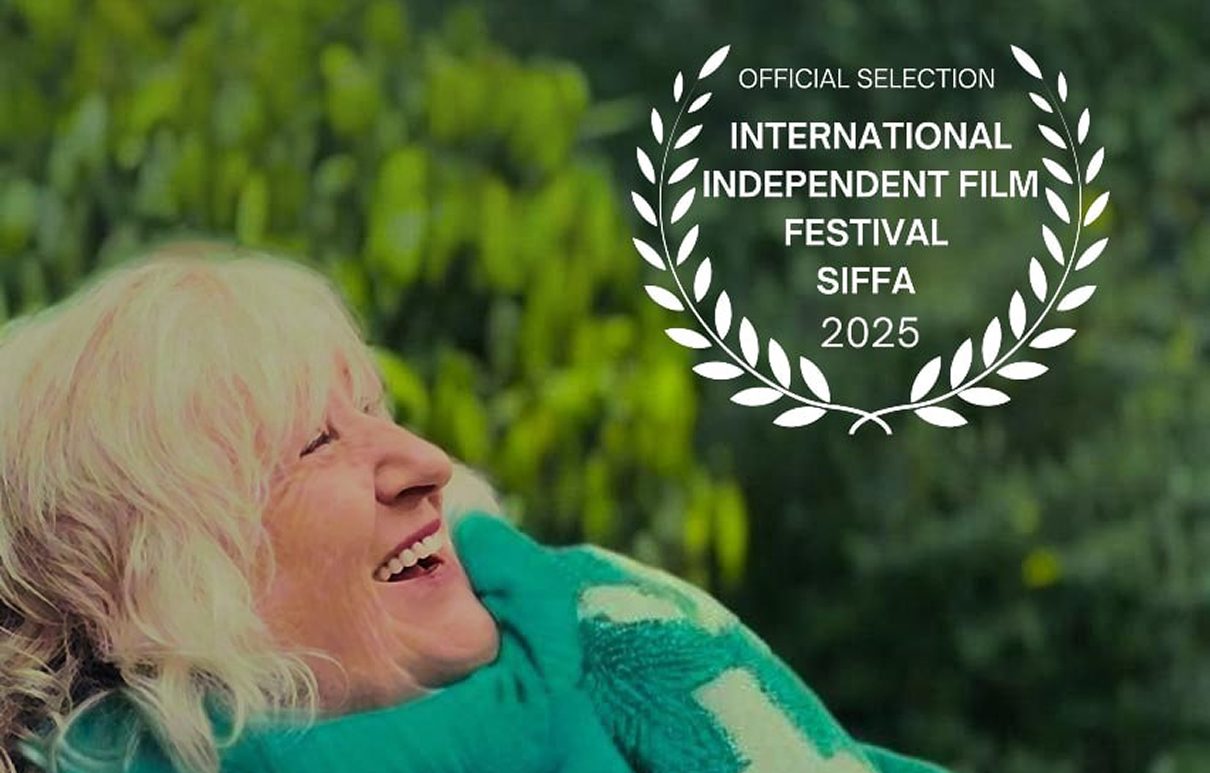
This opening line of the documentary film about Lydia Grigorieva sets not only the tone, but also the philosophical scope of the entire film. This is not just a biographical portrait. It is a reflection on the metaphysics of artistic individuality, on how a person becomes a cultural phenomenon, and life itself turns into a form of art.
Director Maria Bregman has created a film that is both intimate and universal. Early morning in London, in Lydia's kitchen. The sharp aroma of tea fills the air, and the quiet rustling of the garden creates a sense of transition to another time. From this silence emerges not just a conversation, but a dialogue in the Bakhtinian sense, an encounter between personality and time, memory and the present, life and its endless echo.
Dialogue as a Way of Being
Mikhail Bakhtin wrote that a person lives in a world of "other people's voices," and that through dialogue one becomes oneself. In this sense, "Lydia Grigorieva. I Choose to Live" is not a film about the past, but about the dialogic nature of culture itself. Lydia speaks — and through her voice, others speak too: Brodsky, Bobyshev, Bukharaev, her son, her generation. Each word does not belong solely to her; it resonates through others, creating a space of meanings that continues to live beyond death.
There is no pathos on screen — only a voice, a garden, the morning, and a tone of simplicity. Yet within this simplicity arises what Martin Buber called the "I–Thou" moment — the presence of the Other, with whom genuine connection becomes possible. Grigorieva's poetry is not a monologue; it is a way of being with the world.
Individuality as an Act of Resistance
The film shows that individuality is not just a state of mind, but a way to resist oblivion. As Hannah Arendt once wrote, actions and speech are what distinguish humans from other creatures. Lydia lives precisely this way: through her voice, her art, and her life, which unfolds as a continuous act of self-expression.
Her story unfolds not as a linear biography, but as a poem — where the personal becomes universal. The loss of her son, the deaths of loved ones, emigration — all this is not destruction, but transformation. In this, Lydia resembles Nietzsche's vision of the artist who creates meaning out of suffering. Her poetry and photography are not an escape from reality, but an act of overcoming — and of rebirth.
The Author as a Cultural Mediator
From an anthropological point of view, Lydia Grigorieva is a transitional figure, a mediator between worlds. Culture is a web of meanings woven from human lives, and the role of the poet is to connect the personal with the collective. Lydia connects 1960s Moscow with 21st-century London, Russian poetry with European sensibility, life with art.
Her home and garden form a small universe of culture, a space where the past and present communicate with each other through the aroma of tea, the texture of photographs, the sounds of a choir and the spoken word.
Documentary as a Form of Immortality
It is no coincidence that Maria Bregman's work is defined as documentary. However, it departs from traditional documentary narrative, giving preference to rhythm, breath and memory rather than linear storytelling. It is a form in which poetry becomes a way of knowing the world, and editing becomes a reflection of internal dialogue.
Here, the sensitivity of the poet and the director intertwine — not to create a biography, but to create a metaphysical testimony to life, in which art and existence are inseparable.
Epilogue: disobedience and continuation
'Don't you dare!' says Lydia in one of her poems, addressing Death itself.
This phrase becomes the philosophical refrain of the film. It does not simply tell a life story, it asserts that poetry is a form of immortality, and that the individuality of the artist is a catalyst for cultural renewal.
Every word she utters continues the dialogue once described by Bakhtin — a dialogue in which man becomes worthy of eternity.
Postscript
"Lydia Grigorieva. I Choose to Live" is not just a documentary about a poet. It is an inquiry into the very nature of creation. The film raises the same questions that preoccupied twentieth-century philosophers and anthropologists:
— Can a person remain unique in a world of endless communication?
— How does individuality become a cultural phenomenon?
— Can art overcome death?
The film's answer is quiet but clear:
Yes — if you live for eternity.