
By Maria Bregman
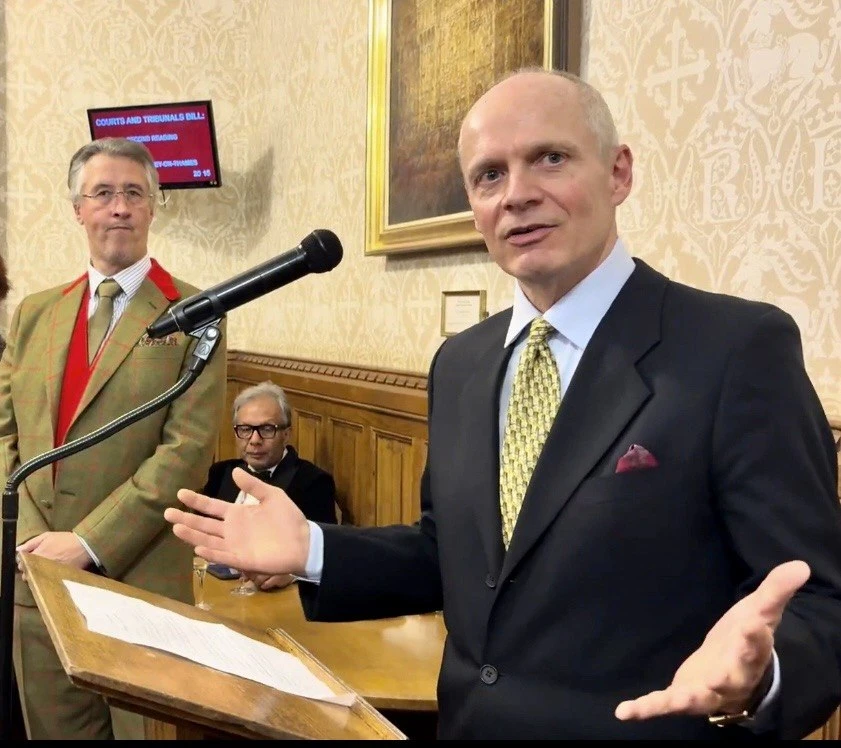
At the fourteenth edition of CC Forum London, investors, scientists, family offices and entrepreneurs gathered across five London venues – from the House of Lords to Mayfair – to confront the future of capital, artificial intelligence and sustainability. In my comprehensive report on the forum for Creativity's UK, one address stood out for cutting through the noise of technical metrics and financial jargon to articulate the moral compass that modern innovation demands. Speaking as master of ceremonies of CC Forum London 2026, Ludvig Nobel delivered a keynote on conscience, leadership, and what he terms Planetary Responsibility: urging leaders to move from asking merely what we can do, to deciding what is worth doing.
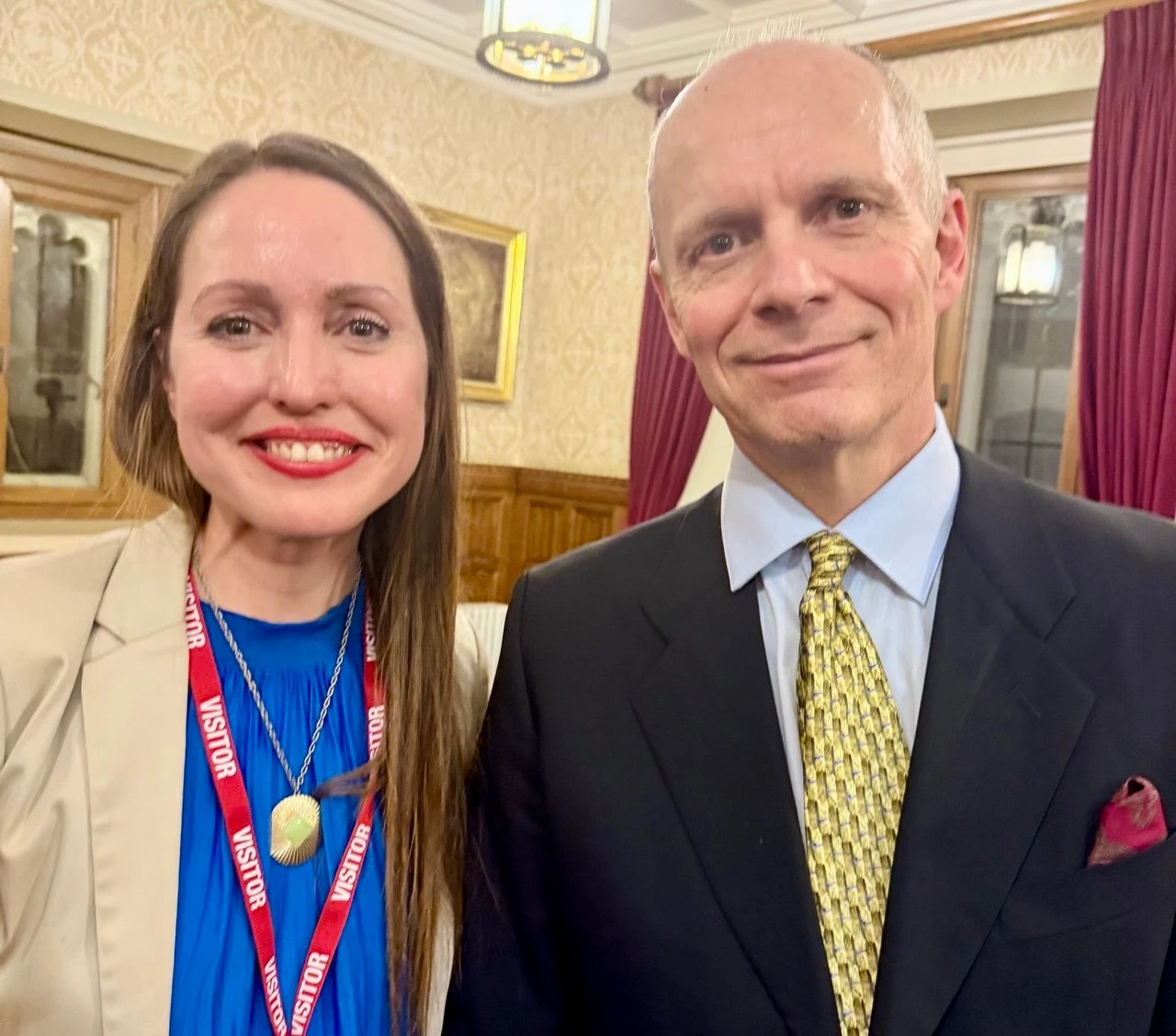
Ludvig Nobel and Maria Bregman at CC Forum London XIV, October 2026. Photo: Creativitys.UK
We are living through a period of extraordinary human capability. Technology is advancing at a pace few of us could have imagined even a generation ago. Capital can move ideas across borders with extraordinary speed. Science is extending what is possible across energy, medicine, communications and artificial intelligence.
Yet, as Ludvig Nobel warned the assembly of investors and leaders in London, capability without direction is a hazard. "Intelligence without conscience is not wisdom," he argued. "We can build powerful systems, deploy enormous amounts of capital and accelerate innovation. But that does not tell us whether we are moving in the right direction."
For Nobel, sustainability cannot be treated as a defensive posture or an ethical compromise that forces business to sacrifice opportunity. On the contrary, some of the most profound economic opportunities of the twenty-first century will emerge directly from the urgent ecological and human challenges we face.
"Profitability and sustainability are not opposites," Nobel stressed. "The strongest solutions unite them. But ideas alone are not enough. The challenge is creating the conditions that allow the best ideas to endure, scale and become part of the way we live. That requires capital, leadership, partnerships and the willingness to move from innovation to implementation. And that move is not simply financial or technical. It is also an ethical responsibility."
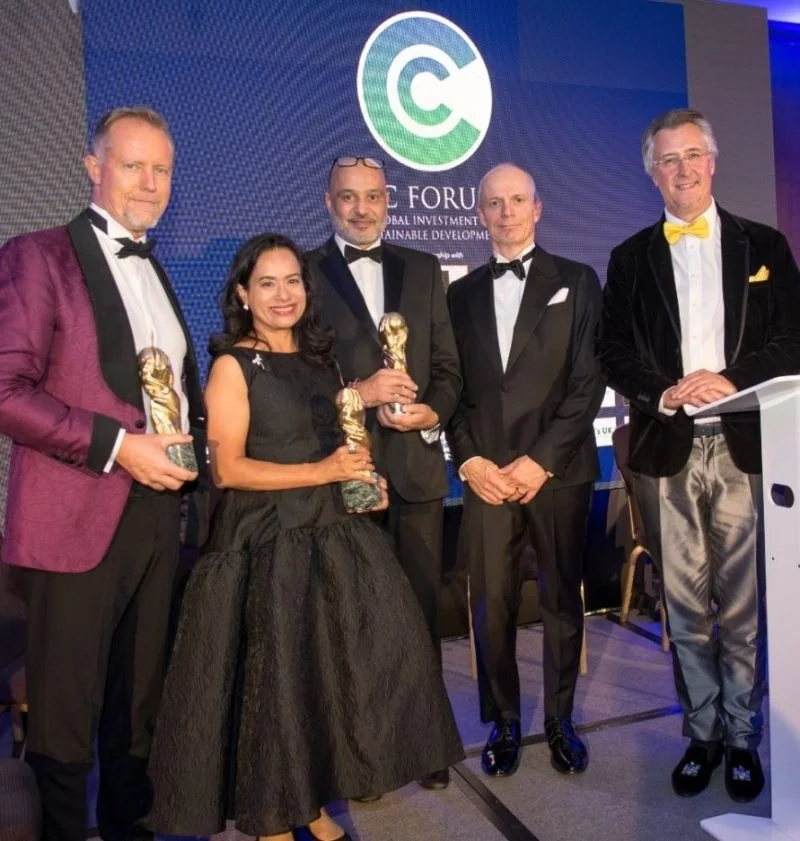
Ludvig Nobel and Max Studennikoff with CC Forum London 2026 honorees Paul Hutchinson, Runa Alam and Gurudev Sri Sri Ravi Shankar (represented). Photo courtesy of Ludvig Nobel
Planetary Responsibility
At the heart of Nobel's philosophy is the concept of Planetary Responsibility. In an interconnected global economy, no decision remains purely local. Capital allocations, technological deployments, climate impacts and human wellbeing ripple across borders with unprecedented speed.
Because the consequences of our choices travel, our sense of responsibility must travel just as far. As Nobel articulated, future generations belong in the room even when they cannot sit at the table: they will inherit the systems we normalize, the infrastructure we finance, and the environmental ledger we leave behind.
Watch: Ludvig Nobel at CC Forum London 2026
Full Address: Beyond What We Can Do
The complete text of Ludvig Nobel's keynote address, delivered at the CC Forum London XIV Gala Dinner at The May Fair Hotel on 29 October 2026:
We are living through a period of extraordinary human capability. Technology is advancing at a pace few of us could have imagined even a generation ago. Capital can move ideas across borders with extraordinary speed. Science is extending what is possible across energy, medicine, communications and artificial intelligence.
But I believe there is a question that must come before all the others.
Not simply: What can we do? But: What is worth doing?
Capability gives us possibilities. It does not give us direction. And the greater our capability becomes, the greater our responsibility becomes to choose wisely.
For me, this is where conscience enters the conversation. I mean that inner voice that asks us to look beyond what is immediately profitable and consider the consequences of what we are creating.
Intelligence without conscience is not wisdom. We can build powerful systems, deploy enormous amounts of capital and accelerate innovation. But that does not tell us whether we are moving in the right direction.
Too often, sustainability has been presented as a limitation, asking business to sacrifice opportunity for responsibility. I see it differently. Responsibility and opportunity are not opposites. Some of the greatest opportunities of the coming decades will emerge precisely from the challenges we urgently need to solve.
How do we use energy more intelligently? How do we restore natural systems while creating prosperity? How do we use artificial intelligence to expand human capability without diminishing human dignity?
Profitability and sustainability are not opposites. The strongest solutions unite them. But ideas alone are not enough.
The challenge is creating the conditions that allow the best ideas to endure, scale and become part of the way we live. That requires capital, leadership, partnerships and the willingness to move from innovation to implementation. And that move is not simply financial or technical. It is also an ethical responsibility.
Because what we choose to finance, build and scale helps shape the world that will exist after us. That is why future generations belong in the room, even when they cannot sit at the table. They will inherit the systems we build, the technologies we normalize and the environmental consequences of our decisions.
So perhaps one useful question for investors, entrepreneurs and leaders is not simply: Will this succeed? But also: If it succeeds, what will it set in motion? Who will benefit? What will it leave behind?
My own work increasingly revolves around what I call Planetary Responsibility. At its heart, it is a simple idea. We are no longer living in a world where our actions remain local. Capital, technology, climate, resources and human wellbeing are deeply interconnected. Our decisions travel. Their consequences travel. And therefore our sense of responsibility must travel as well. Planetary Responsibility means recognizing that wherever we have influence, our choices matter beyond the immediate transaction.
Leadership is not only the ability to make something happen. It is the judgment to decide what deserves to happen.
So as we meet here in London to discuss investment in sustainable development, I would leave you with one question. Not: What are we capable of building? We already know that human capability is extraordinary. The more important question is: What are we willing to take responsibility for building?
Because the future will not be shaped by possibility alone. It will be shaped by the choices we have the courage to make.
Thank you.
Sources and Further Reading
- Maria Bregman, "CC Forum London XIV on Capital, AI and Climate", Creativity's UK, November 2026: https://creativitys.uk/cc-forum-london-xiv-2026-review/
- Ludvig Nobel, Keynote Address at CC Forum London 2026: https://www.youtube.com/watch?v=3ziuwYVg7RM
- Maria Bregman, "Can Private Wealth Save the Planet?", BGTC Voice, November 2026: https://bgtc.uk/bgtc-voice/can-private-wealth-save-the-planet
- CC Forum – Global Leaders in Sustainable Development: https://cc-forum.com
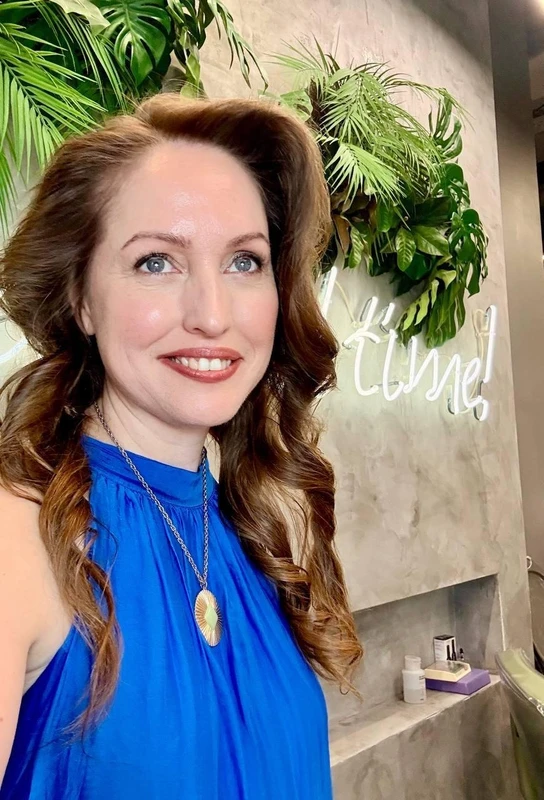
Maria Bregman at CC Forum London XIV. Photo: Creativity's UK
Maria Bregman is a strategist working across art, technology and capital, and the founder and editor-in-chief of Creativity's UK. She attended CC Forum London XIV as an accredited media partner.