
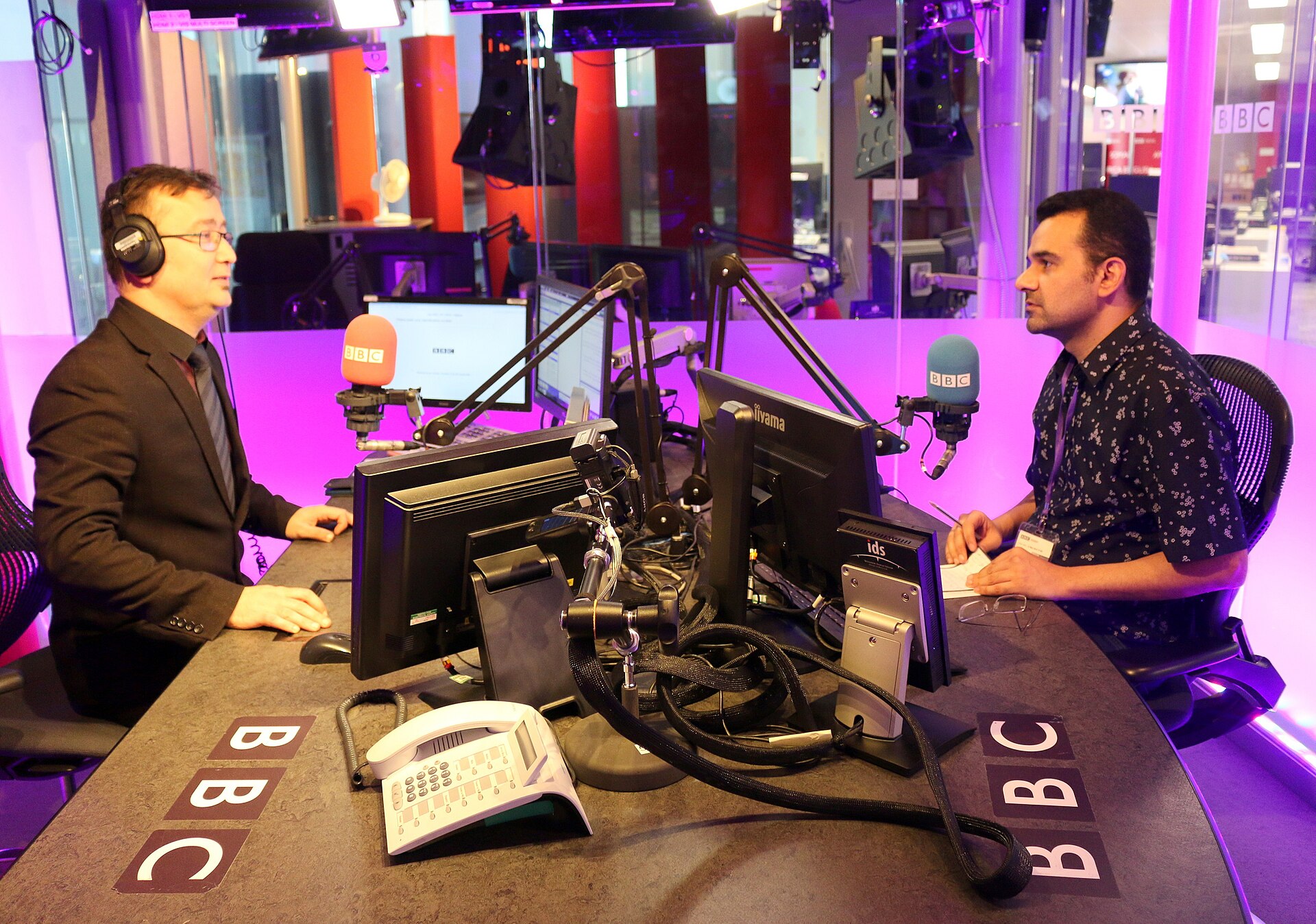
A media interview is not a conversation. It is a published product, cut and shaped for an audience you will probably never meet. The interviewer is not an opponent, but they are not on your side either. They need a story, and they will edit whatever you give them into one. Preparation is what decides whether your words survive that edit in a form you recognise.
This checklist covers the whole arc of an interview, from the request that arrives in your inbox to the follow-up after publication. It assumes a professional interview about your work: a trade publication, a sector podcast, a local news item, or a conference panel. The principles hold across most formats, though the details change between a live broadcast and a written profile.
Before you agree - understand the format
Most avoidable problems start before the interview begins. When a request arrives, answer a few basic questions first. Is the interview live or recorded? Print, audio, or video? Is it a profile, an expert comment, or part of a wider investigation? Who is the audience, and what is the piece really about?
It is reasonable to ask the journalist what topics they plan to cover, and whether the conversation is on the record. In UK practice, a discussion is treated as on the record unless you agree otherwise in advance, so settle that point before the call rather than during it.
If the interview falls outside your actual expertise, it is better to decline politely and, where useful, suggest someone who fits. A confident specialist who stays within their field is easier to trust than one who answers everything.
Define your core messages
Decide in advance what you want a reader to take away, and keep the list short. Two or three messages is usually the maximum that survives an edit. Each message should be a single clear claim with one concrete example attached, because examples are harder to cut and easier to remember.
Write the messages down in the plainest language you can manage. If you cannot state a message in one sentence, it is not ready to be spoken. Then prepare a bridge: a short phrase that moves an awkward or tangential question back to something you can answer well. Bridging is not evasion, as long as the eventual answer is honest and relevant.
Prepare facts and set your boundaries
Bring the numbers, dates, and names you can defend, and check them before the interview rather than during it. If you are not certain of a figure, say so plainly. A wrong number repeated in print is far more damaging than an admitted gap.
Decide in advance what you will not discuss. Client names under confidentiality, an ongoing matter, or anything you would not want attached to your name in a search result should be marked as off limits. If a question probes a boundary, a simple line such as "I cannot go into that" is enough, followed by a redirect to something you can discuss.
Manage the interview itself
During the recording, slow down. Short answers are almost always better than long ones, and silence is not a gap you must fill. If a question is built on a false premise, correct the premise before answering. If you misspeak, correct yourself cleanly and move on.
Avoid speculation. Sentences that begin "I think it might" become liabilities once they lose their qualifiers in editing. Stick to what you actually know, say when you are giving an opinion rather than a fact, and let the interviewer carry the pressure to produce excitement.
After the interview
If the format allows, ask whether you can check factual points before publication, such as the spelling of your name, your title, and any figures. Not every outlet offers this, and some will refuse, but it is a fair request and often granted.
Keep your notes. Record what you said, to whom, and when. If the published piece contains an error, that record makes the follow-up straightforward. Following the process calmly is what keeps a routine interview from turning into a problem.
Practical checklist
- [ ] Confirm the format, the audience, the angle, and whether the conversation is on the record.
- [ ] Ask which topics the journalist intends to cover before agreeing to speak.
- [ ] Prepare two or three core messages, each paired with one concrete example.
- [ ] Check every figure, date, and title you plan to use, and drop anything you cannot defend.
- [ ] Decide what is off limits, and keep a short, polite phrase ready for those questions.
- [ ] Keep answers short, correct false premises, and resist the urge to fill silence.
- [ ] Ask whether there is an opportunity to verify factual details before publication.
- [ ] Record what you said and to whom, so you can follow up calmly if something is wrong.
Contributing to BGTC Voice
Knowing how to prepare for an interview turns a nerve-wracking encounter into a repeatable routine. If you have handled difficult questions, worked out how to explain complex work in plain language, or learned from an interview that went badly, writing for BGTC Voice lets other practitioners benefit from it. Submissions should stay practical and factual, and leave out anything covered by confidentiality.