
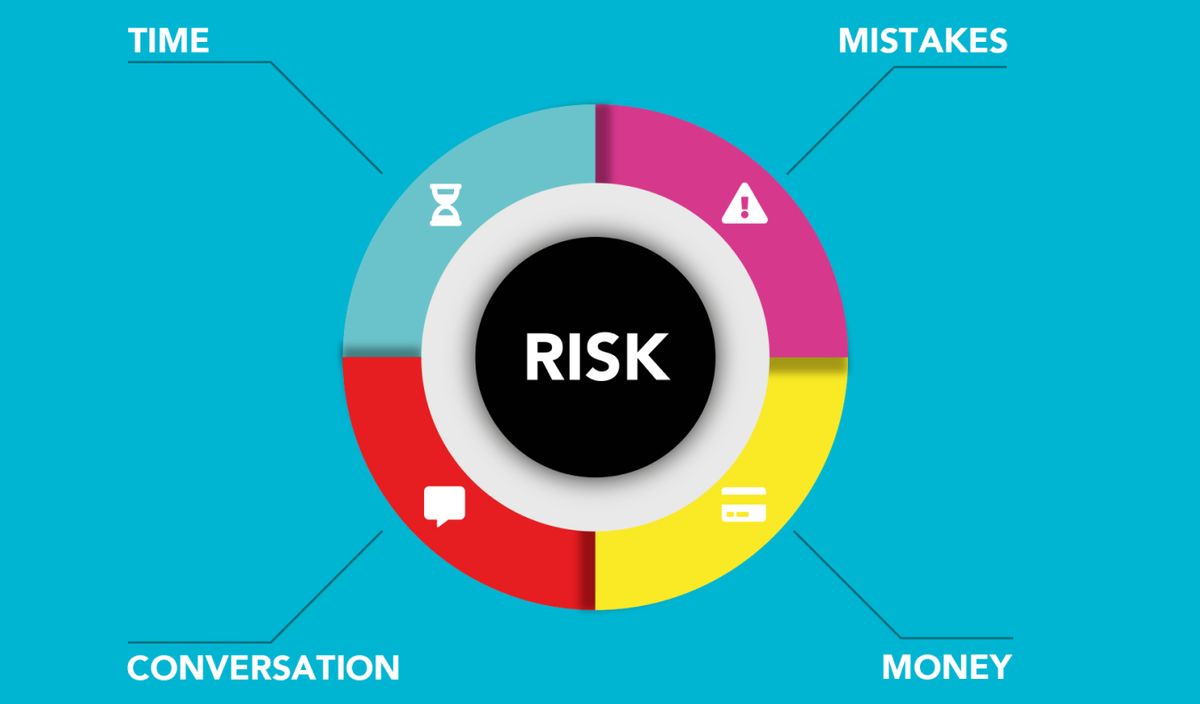
Every consequential commercial choice introduces uncertainty. A newly contracted supplier might fail to meet delivery deadlines, an unvetted software modification could dislocate client workflows, or geographical expansion may absorb significantly more capital than initial forecasts permitted. Attempting to suppress every imaginable exposure routinely paralyses valuable enterprise. Conversely, disregarding operational hazards leaves an enterprise vulnerable to financial losses that could have been restricted through proportionate governance.
Disciplined risk management enables leadership to pinpoint circumstances capable of compromising organizational aims, establish proportionate defences, and detect early indications of adverse drift. The intention must always be purposeful execution. A risk register populated with generic anxieties cannot compensate for unambiguous decisions, designated owners, and persistent operational follow-through.
Anchor risk assessments to strategic objectives
An operational risk acquires meaning only in relation to what the organization is committed to accomplishing. Analysis should therefore open with a defined objective and an explicit operational horizon: delivering a client implementation by a prescribed calendar date, sustaining platform uptime, preserving liquid reserves across a twelve-month expansion cycle, or satisfying statutory compliance requirements. Absent that anchoring context, management teams spend valuable hours debating remote hypotheticals while overlooking vulnerabilities that directly imperil current operations.
Senior teams should investigate what specific disruptions could trigger a material divergence from stated targets. This inquiry must evaluate both downside exposure and uncaptured upside: an unmanaged exposure may represent a missed commercial opening just as readily as an unexpected expense. Keeping the analytical scope disciplined is essential. A compact, decision-linked portfolio of risks proves far more serviceable than an exhaustive compendium of speculative misadventures.
Structure risk definitions through cause, event, and consequence
Clarity demands that each distinct vulnerability be articulated as an interconnected chain consisting of three components:
- Root cause: the underlying condition, capability constraint, or external dependency
- Risk event: the specific operational disruption or critical failure that may transpire
- Material consequence: the resulting impairment to commercial targets, financial reserves, or client trust
For example, stating that reliance on a sole component vendor (cause) could result in a manufacturing shutdown (event), thereby incurring contractual delay penalties and reputational damage (consequence), isolates the mechanism cleanly. This decomposition separates the structural condition from the trigger event and its eventual impact, providing an actionable foundation for mitigation.
Vague catalogue entries such as "competition", "regulatory headwinds", or "cyber risk" should be rejected. Practitioners must describe the concrete transmission mechanism. What specific change might occur? Which operational dependencies would be interrupted? What quantifiable harm would follow? If an operating unit cannot explain the transmission sequence, preliminary discovery is required before assigning subjective risk ratings.
Establish uniform criteria for severity and probability
Organisations require straightforward scoring mechanisms calibrated to their operating realities, whether structured as categorical bands (low, medium, high) or explicit numerical brackets. Importantly, each grading level must be clearly defined in advance. Probability ought to reference a fixed time interval, whereas impact should quantify observable disruption across balance-sheet exposure, delivery timelines, customer detriment, regulatory scrutiny, and operational friction. Unanchored scores give a deceptive impression of precision while obscuring fundamental divergences in executive judgement.
Impact evaluations should span multiple operational dimensions rather than resting entirely on immediate cash outlay. A modest direct financial cost may carry severe implications for safety standards, brand equity, or regulatory licensing. Reviewers must record the empirical basis supporting an estimate, together with the degree of confidence assigned to it. Where market data is sparse, reporting credible ranges is preferable to fabricating precise numbers. The resulting score serves as a diagnostic prompt for executive scrutiny, not an actuarial prediction.
Analysts must separate inherent exposure from residual exposure:
- Inherent exposure: the gross vulnerability existing prior to any mitigation or supervisory controls
- Residual exposure: the net vulnerability remaining once established safeguards operate as designed
Leadership must verify whether declared controls are genuinely operational, regularly tested, and actively maintained. A published policy manual does not, in itself, reduce operational vulnerability.
Deploy proportionate operational responses
Executive teams can select from several established response strategies: avoiding the proposed activity entirely, lowering probability or consequence through active mitigation, transferring exposure via insurance or contractual arrangements, or deliberately accepting the vulnerability within agreed boundaries. These options are rarely equivalent in practice. Commercial insurance may reimburse verified financial losses, yet it cannot restore lost customer confidence or reclaim surrendered market timing. Similarly, mitigating an exposure frequently introduces administrative expense, operational lag, or novel dependencies elsewhere.
For each substantial risk, directors must weigh the direct expenditure and friction of a mitigation against the exposure it intends to curtail. Feasible countermeasures include phased pilots, contractual liability caps, alternative suppliers, segregation of duties, automated quality thresholds, dedicated contingency reserves, or revised execution schedules. The proposed intervention must remain practically viable and avoid creating unintended bottlenecks. Where consequences could prove existential, specialist technical or legal counsel must be consulted rather than relying on informal internal speculation.
Establishing formal operating thresholds converts generalised caution into measurable governance. For example, a business may authorise a product roll-out on the explicit condition that project expenditure remains below an agreed ceiling and defect rates do not breach defined tolerance limits. When an agreed boundary is crossed, mandatory executive review is triggered automatically.
Designate accountability and early warning indicators
Every material risk requires a named owner invested with institutional authority to monitor signals and direct mitigation. An accountable owner may not command every causative factor, but they must possess the mandate to mobilise operational remedies. The register should specify the owner, the scheduled review date, and any cross-departmental dependencies. An unassigned risk item remains an administrative observation without operational consequence.
Monitoring systems should track leading indicators capable of signalling deterioration well before failure occurs:
- Changes in supplier turnaround times and component backlogs
- Upward drift in customer support escalations and software bug tallies
- Delays in statutory approvals or contract sign-offs
- Variance against cash burn forecasts and debtor collection periods
Each metric must feature a clear origin, a specified review frequency, and a documented escalation route. Easy-to-measure vanity metrics disconnected from the underlying failure mechanism should be discarded.
Leadership must agree in advance on the protocol triggered when an indicator breaches its threshold. Management may halt code deployment, draw upon pre-authorised contingency funds, switch to an alternative logistics partner, or convene an emergency executive session. If a remedy requires formal sign-off, the designated approver must be identified beforehand. Warning signals lacking defined intervention mechanisms merely generate anxiety without shielding the enterprise.
Establishing empirical review loops and risk governance
Risk oversight must function as an iterative governance cycle rather than an annual compliance exercise. Appraisals should be refreshed whenever operating assumptions alter, major milestones are passed, an internal incident occurs, or market conditions shift. Following any operational disruption, management must conduct an objective review: was the vulnerability diagnosed beforehand, did preventative measures perform as planned, and did leading indicators provide sufficient advance notice? Retrospectives must focus on improving operational systems rather than allocating personal fault for reasonable decisions made under imperfect information.
A functional governance record tracks the risk description, cause-event-consequence chain, inherent and residual scores, agreed response plan, single owner, warning triggers, and next audit date. Senior executives require visibility over the small portfolio of critical exposures demanding strategic intervention, while operational units manage the tactical details necessary for day-to-day containment.
Proportionate risk management reinforces execution by clarifying what compromises are being accepted, how variances will be identified, and what corrective actions stand ready for deployment. This operational discipline enables an expanding enterprise to proceed with confidence, treating uncertainty as a manageable component of commercial progress.
Practical risk governance checklist
- [ ] Anchor every recorded risk to a specific strategic objective and operational timeframe.
- [ ] Articulate each exposure through an unbroken cause, event, and consequence sequence.
- [ ] Define uniform likelihood and impact scales with explicit operational and financial benchmarks.
- [ ] Distinguish inherent vulnerability from residual exposure supported by verified controls.
- [ ] Select proportionate responses, evaluating the friction and secondary risks of mitigation.
- [ ] Establish operational tolerance limits that trigger mandatory managerial intervention.
- [ ] Assign every significant exposure to a single named owner with authority to act.
- [ ] Track measurable leading indicators capable of identifying operational drift early.
- [ ] Revisit risk registers upon the occurrence of key milestones, incidents, or assumption changes.
Submitting operational risk frameworks to BGTC Voice
Managing uncertainty while maintaining execution speed is one of the foundational disciplines of enterprise leadership. Founders, risk officers, and operating executives who have developed effective risk management architectures, operational threshold triggers, or post-incident review practices are invited to submit their analyses to BGTC Voice. Submissions should outline the governance frameworks, empirical metrics, and organizational lessons learned, providing sufficient operational detail to assist leaders across the wider ecosystem.