
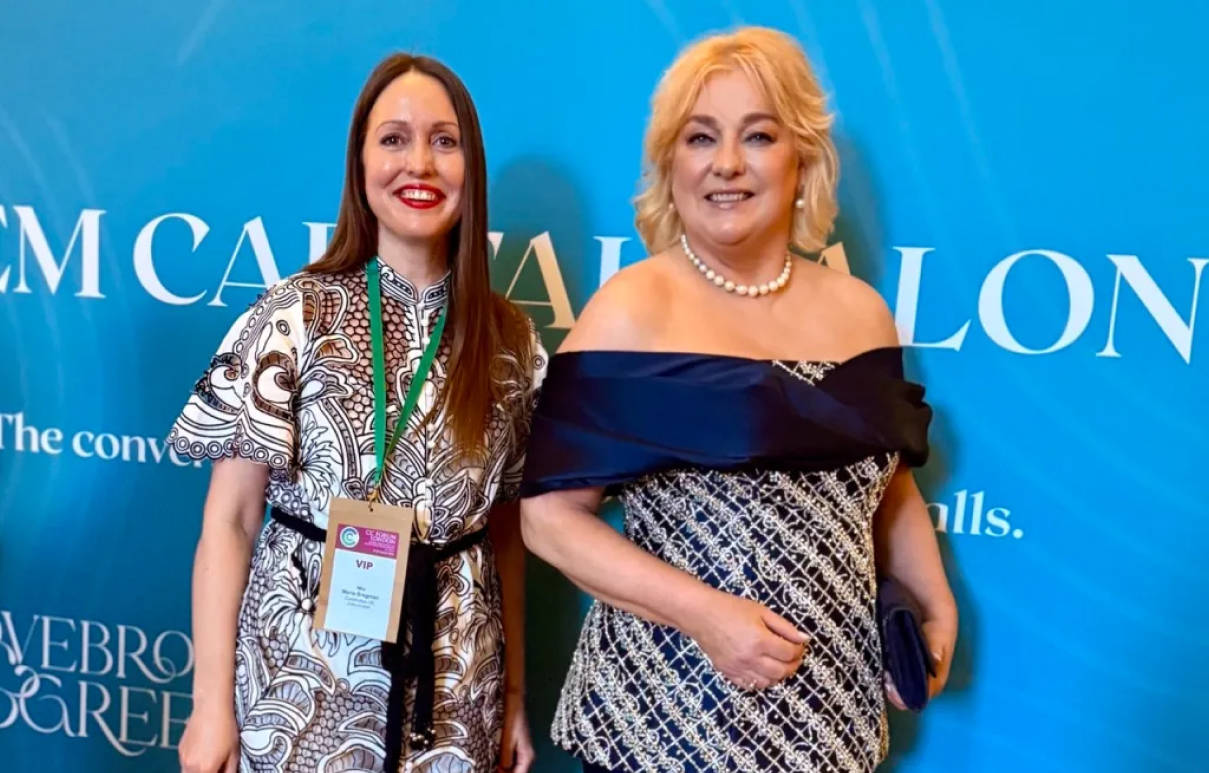
By Maria Bregman, founder of the British Global Talent Council; film critic and documentary director.
Christine Koetsier spent two decades placing executives and ten years testing a method to read what assessments miss. Now she wants the corporate door.
The global management consulting industry has become a vast market, with estimates placing its value between $360 billion and $510 billion in 2025. Leadership development and executive coaching represent one of its fastest-growing segments, estimated at around $113 billion globally in 2026.
Yet companies continue to face the same leadership problems: founders struggling to step aside, executives placed in roles that do not suit them, and teams that perform well on paper while losing people internally.
This is the space Christine Koetsier is exploring with Soul Language, a framework centred on an assessment called the Soul ID.
Beyond conventional personality tests
Companies already use tools such as Hogan, DISC, MBTI, the Enneagram and CliftonStrengths. Each serves a different purpose, from behavioural analysis and communication to leadership assessment and strengths identification.
Koetsier positions Soul Language differently. It is not intended as a clinical diagnostic or a conventional personality test. Instead, it is presented as a framework for understanding motivation, patterns and the way people respond under pressure.
The method asks questions that standard assessments may not address directly: What drives a decision? Is a reaction coming from confidence or protection? Is a person operating within their strengths or repeating an established pattern?
Koetsier describes Soul ID as a feedback system rather than a fixed description of personality. The assessment maps seven areas: Role, Goal, Fear, Approach, Mindset, Adaptation and Phase. It identifies one dominant energy and supporting energies, organised around seven archetypes: Helper, Artist, Warrior, Scholar, Sage, Priest and King.
The framework treats characteristics as a range rather than a fixed trait. The same quality can appear in constructive or defensive forms, depending on circumstances.
From executive search to Soul Language
Koetsier's background is firmly rooted in business. She spent more than a decade at Amrop, an international executive-search firm, and has worked for nearly two decades through GEM Partners in Amsterdam and San Francisco, focusing on leadership and organisational transformation.
She says the method developed gradually over more than ten years. She studied an existing body of archetypal material, tested it with candidates and clients, and developed the assessment and interpretation system around it.
Her contribution was also one of translation: taking a complex and partly metaphysical framework and developing a language that executives could use in a professional context.
Today, Koetsier works across GEM Partners, Fem Capital, BoardWise and Arcken AI Studio. She is now preparing Soul Language for wider investment and commercial development.
Her interest in the relationship between leadership and long-term change has also appeared in her work around impact investing and energy transition. At CC Forum London and Fem Capital Salon, she has argued that capital allocation and technological transformation ultimately depend on the people making decisions.
From individual insight to organisational use
Christine Powers, a certified Soul ID practitioner in the United States, works mainly with founders and senior executives. She describes clients who have achieved significant professional success but reach a point where external achievements no longer answer questions about identity, direction and the next stage of their careers.
One of her clients, the founder of a company valued at around $40 million, used the process while considering succession, a potential sale and her future after the business. According to Powers, the eventual transition made the professional and personal questions inseparable.
Powers also experienced the method herself. Her profile showed significant King energy, associated with leadership and authority. Yet she had spent much of her career feeling more comfortable supporting senior leaders than occupying the top position herself.
The framework gave her a different way to interpret that preference. Rather than seeing it as a professional limitation, she began describing herself as a “King Whisperer”.
A case inside an organisation
Nicolette Koeman provides a different example because she used Soul Language with an entire team.
Koeman works for an international disaster-relief organisation and had previously built its Mexican office. After several years, she felt that she had reached a professional ceiling. She completed the Soul ID assessment and continued returning to the document over the following years.
Eventually, she moved to the organisation's US headquarters and took responsibility for marketing. She later combined fundraising and marketing communications into one function.
She then introduced Soul Language to her multicultural, distributed team.
According to Koeman, the assessment helped team members identify their own patterns and recognise different ways of communicating and making decisions. Some employees concluded that their existing roles were no longer suitable, leading to conversations about leaving the organisation.
Koeman does not describe Soul Language as a standalone solution. She emphasises that the method requires reflection and interpretation rather than producing automatic answers.
That distinction is important for its potential corporate use. The assessment provides a framework, but its practical value depends on how people apply and discuss the results.
The challenge of entering the corporate market
The commercial question for Soul Language is not whether it can replace established corporate assessments. It is whether it can address a different part of the leadership problem.
Traditional tools can help companies understand behaviour, strengths, personality characteristics and potential risks. Soul Language focuses more heavily on motivation, internal patterns and the relationship between identity and professional roles.
Powers says bringing the method into larger corporate environments remains one of the main challenges. The framework has been used with individual executives and teams, but broader corporate adoption requires organisations to see its practical value.
Koeman's experience offers one example of that transition. Her team used the method as part of an existing organisational structure rather than as a standalone programme.
From methodology to business
Koetsier is now developing a broader ecosystem around Soul Language. At its centre is the Soul ID Avatar, designed as a persistent representation of a person's profile that could eventually support applications across areas such as education, human development, mental health and longevity.
She distinguishes the methodology itself from the technology being developed around it. Soul Language is a human framework, while software and AI-based tools are intended to help people apply the framework in everyday situations.
The commercial challenge is therefore as much about positioning as methodology. The method has to remain useful to people interested in personal development while becoming practical enough for organisations to consider.
Koetsier has spent much of her career in the rooms where leadership decisions are made. Her next challenge is bringing a framework built around self-knowledge into those same rooms.
Whether Soul Language becomes a widely adopted corporate tool or remains a specialised practice will depend on how effectively it can translate its ideas into measurable organisational use.
Disclosure: Christine Koetsier, Christine Powers, Erik de Groot and Nicolette Koeman gave interviews for this article; The publication retained full editorial control.