
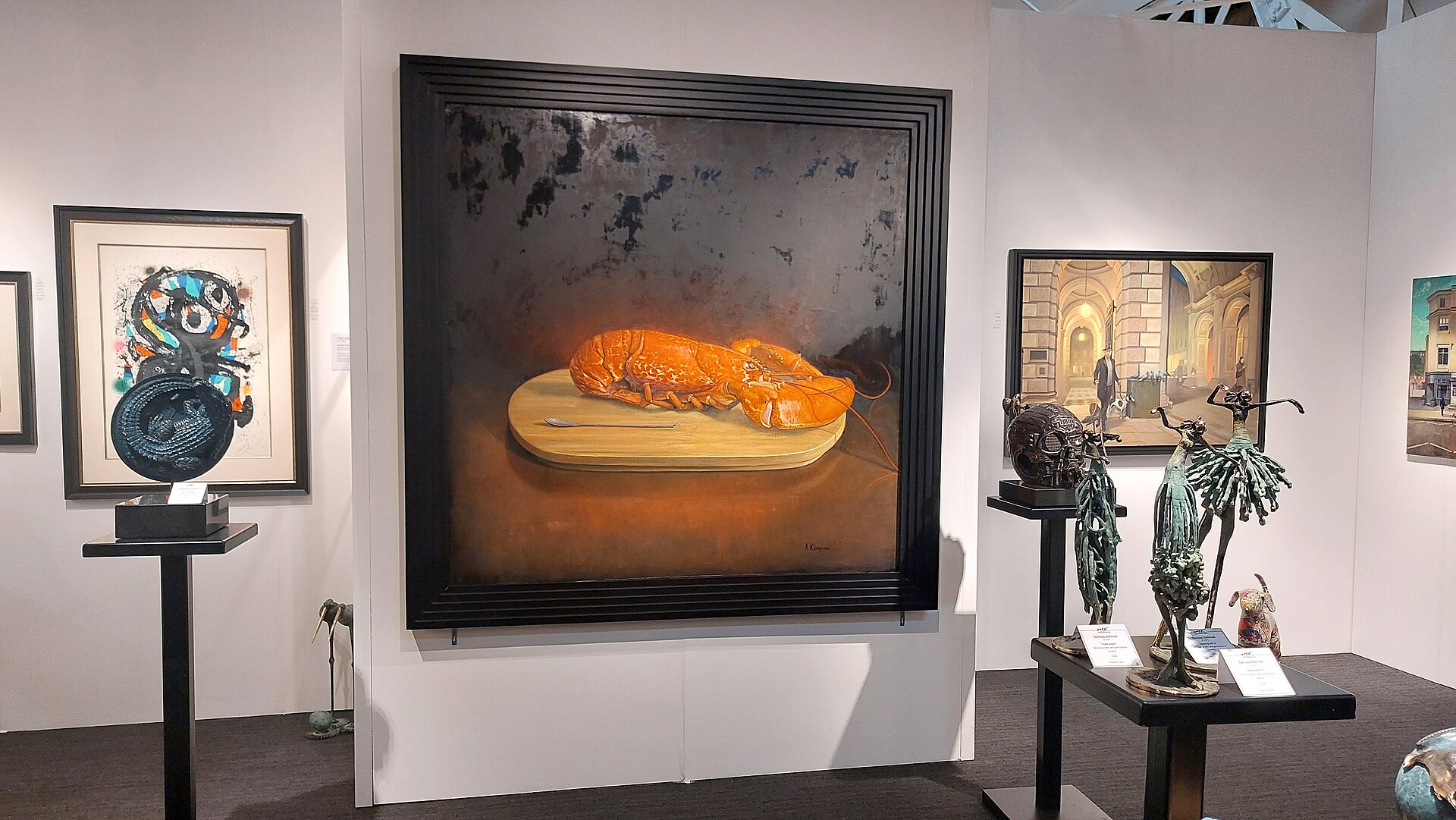
When artists compile a record of their work for grant panels, residency committees or a public profile, the individual entries rarely carry equal weight. A juried open call, a gallery exhibition and an art fair each signal something different about an artist's standing, and assessors read them in different ways. This breakdown sets out what each format actually demonstrates, where its limits lie, and how to present a mixed record with accuracy.
How assessors weigh a public record
Most selection panels are trying to answer a small set of questions. Did the artist make the work? Was it shown in a legitimate public setting to a genuine audience? Who selected or reviewed it? Was the showing independent of the artist's own efforts, or self-organised? A record is strongest when it lets a reader answer those questions without guesswork.
The value of any exhibition credit comes from three things: the selectivity of the route, the standing of the host, and the visibility of the showing. A credit with high selectivity and high visibility tells an assessor far more than a long list of low-selectivity entries. Volume alone, without context, tends to weaken a record rather than strengthen it.
Open calls and juried group exhibitions
Open calls are usually the most accessible route into a public exhibition record. An artist submits to a competition or theme, an external jury selects the work, and the chosen pieces are shown together. The signal here is the selection itself: a work picked from many submissions, by people the artist does not know, carries independent validation.
Two details decide how much weight an open call carries. The first is who selected and judged, since a panel of recognised peers or curators means more than an anonymous process. The second is what happened to the work afterwards, whether it was exhibited in a physical venue, recorded in a catalogue, reviewed, or acknowledged with an award. An open call with a clear jury, a real venue and an archived public presence is solid evidence. A call whose only trace is a certificate and a fee paid should be presented modestly.
For applications, state the exhibition title, the host organisation, the year, the selecting body where known, and your specific contribution if the work was collaborative.
Gallery exhibitions and representation
A gallery exhibition signals that a professional venue invested time, space and reputation in the work. Because galleries choose the artists they show, a gallery credit carries an implied institutional judgement that an open call does not. The distinction matters: assessors treat a show programmed by a named gallery as a higher form of validation than an open call, even when both are group exhibitions.
There is an important difference, however, between exhibiting in a gallery and being represented by one. A representation agreement usually means ongoing commercial commitment, while a one-off group show is a single project. When writing a profile, be precise about which one applies. Claiming representation when the relationship is a single exhibition is the kind of overstatement that damages credibility once it is checked.
Document the venue name, the city, the exhibition dates, the curator or programme where relevant, and whether the work was a group or solo presentation.
Art fairs and commercial validation
Art fairs are commercial events where galleries present work to collectors and buyers. Their presence in a record signals market involvement: a fair implies that a gallery believed the work was saleable and was willing to pay to present it. For some applications, particularly those concerned with professional sustainability, that commercial signal has value. For others, such as research-led or public-funding contexts, it may be of limited relevance.
The key point for an honest record is that an art fair is usually a gallery achievement as much as an artist's own. If you were shown at a fair through a gallery, describe it that way. State the fair, the presenting gallery, the year and the city. Do not imply that you curated, organised or independently secured a fair stand if a gallery did that work. Accurate attribution protects the whole record.
Fairs also vary widely in selectivity and cost, so treat a single appearance as one data point rather than a definitive measure of standing.
Documenting each format consistently
Whatever mix of formats an artist has, consistency is what makes a record readable. Keep the same facts in the same order across a website, a CV and any application, so a reviewer never has to reconcile conflicting versions. Where a format is unfamiliar to a general reader, add one short line explaining what the host body is, so the credit is not left to speak for itself alone.
Practical checklist
- [ ] List every exhibition with the exact title, host venue, city and year.
- [ ] Name the selecting jury, curator or programme wherever it is publicly documented.
- [ ] Distinguish clearly between group shows, solo shows and representation agreements.
- [ ] Describe art fair appearances as gallery presentations, not personal achievements.
- [ ] State your own contribution on any collaborative or group project.
- [ ] Attach a verifiable link to the host venue, catalogue or archive for each major credit.
- [ ] Group entries by type so a reader can see the balance of your record at a glance.
- [ ] Remove any entry you cannot evidence with a credible, checkable source.
Contributing to BGTC Voice
Building an accurate, well-evidenced exhibition record is a practical skill that many artists learn slowly and on their own. If you have developed methods for documenting shows, mapping a selection process, or presenting a mixed exhibition history clearly, BGTC Voice welcomes concrete contributions that help other practitioners do the same.