

Corporate Access to Specialist Talent: Building Ethical, High-Value Programmes
- Redaktor
- Category: Voice
Commercial enterprises frequently require access to specialized intellectual expertise that lies well beyond the scope of their routine employment channels: scientific researchers, technical founders, independent economists, niche engineering consultants, and creative professionals who possess deep, field-tested experience in an emerging market or regulatory landscape. Establishing a formal talent initiative that connects corporate teams with these external specialists can resolve complex technical bottlenecks, challenge internal groupthink, and provide participants with valuable institutional exposure. At the same time, when poorly conceived, such schemes can rapidly degenerate into unfocused corporate networking exercises, unremunerated auditions, or transactional mechanisms designed solely to borrow external prestige without granting contributors genuine influence over decisions.
The distinction between a hollow initiative and a productive collaboration resides entirely in programme architecture. A valuable talent access framework originates from an authentic, well-defined operational demand, maintains rigorous procedural transparency throughout recruitment, and treats external specialists as professional peers endowed with executive agency. It delineates with exactitude what each party is expected to contribute and receive, establishes airtight safeguards for proprietary intellectual capital, and verifies whether the collaboration delivered measurable capability gains extending beyond mere marketing visibility or attendance records.
How to Explain a Failed Venture Honestly
- Redaktor
- Category: Voice
Most founders will close or abandon at least one venture, yet the way that experience is described in public often decides whether it becomes a liability or an asset. Investors, employers and peers have seen enough failures to know that a company which did not work out is not, by itself, proof of poor judgement. A decision made with the information available at the time can be sound even when the result is not, and experienced assessors usually understand that distinction.
What damages credibility is not the failure. It is a story that avoids it, inflates it, or cannot explain it. This guide sets out how to give an honest, verifiable account of a venture that did not succeed, and how to turn that account into something an assessor can trust.

BFI London Film Festival 2026 Has a Second Festival at Picturehouse Central
- Redaktor
- Category: Voice
By Maria Bregman, founder of the British Global Talent Council; film critic and documentary director.
Documenting Operating Experience for Future Ventures
- Redaktor
- Category: Voice
Founders and operators build a great deal of knowledge that never gets written down. The decisions, the reasoning, and the results live in email threads, in memory, and in the minds of people who may later leave. When you start a new venture, or advise one, that experience is far more useful if it is captured in a form you can draw on.
This checklist explains how to document operating experience as you gain it. It covers what is worth recording, how to capture it while it is fresh, how to keep the record lawful and confidential, and how to turn notes into something you can actually use.
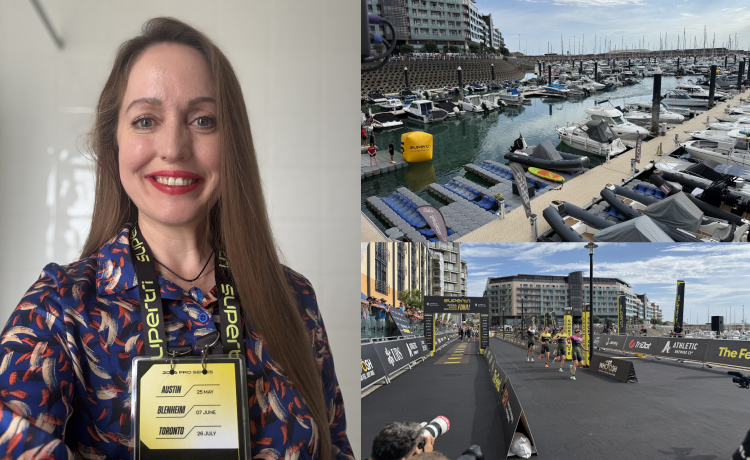
Supertri on Jersey: Inside the Future of Triathlon
- Redaktor
- Category: Voice
By Maria Bregman, founder of the British Global Talent Council; film critic, documentary director and UK Global Talent.
Page 7 of 46